

Keeping an organizational archive of your work and materials is, in itself, a practice of storytelling. Your archive is your story. “Archiving” can sound like a daunting task to add to your already overwhelming day-to-day responsibilities, but it doesn’t have to be. The work you do is valuable, and it is something that should be preserved. This section provides an overview of archiving as a practice and process before introducing a workbook for starting your own archive. The workbook, Your Archive is Your Story: Archiving for Busy People and Organizations, presents an easy-to-follow process for frontline community-based organizations to build an archive documenting the stories and documents arising throughout day-to-day work.
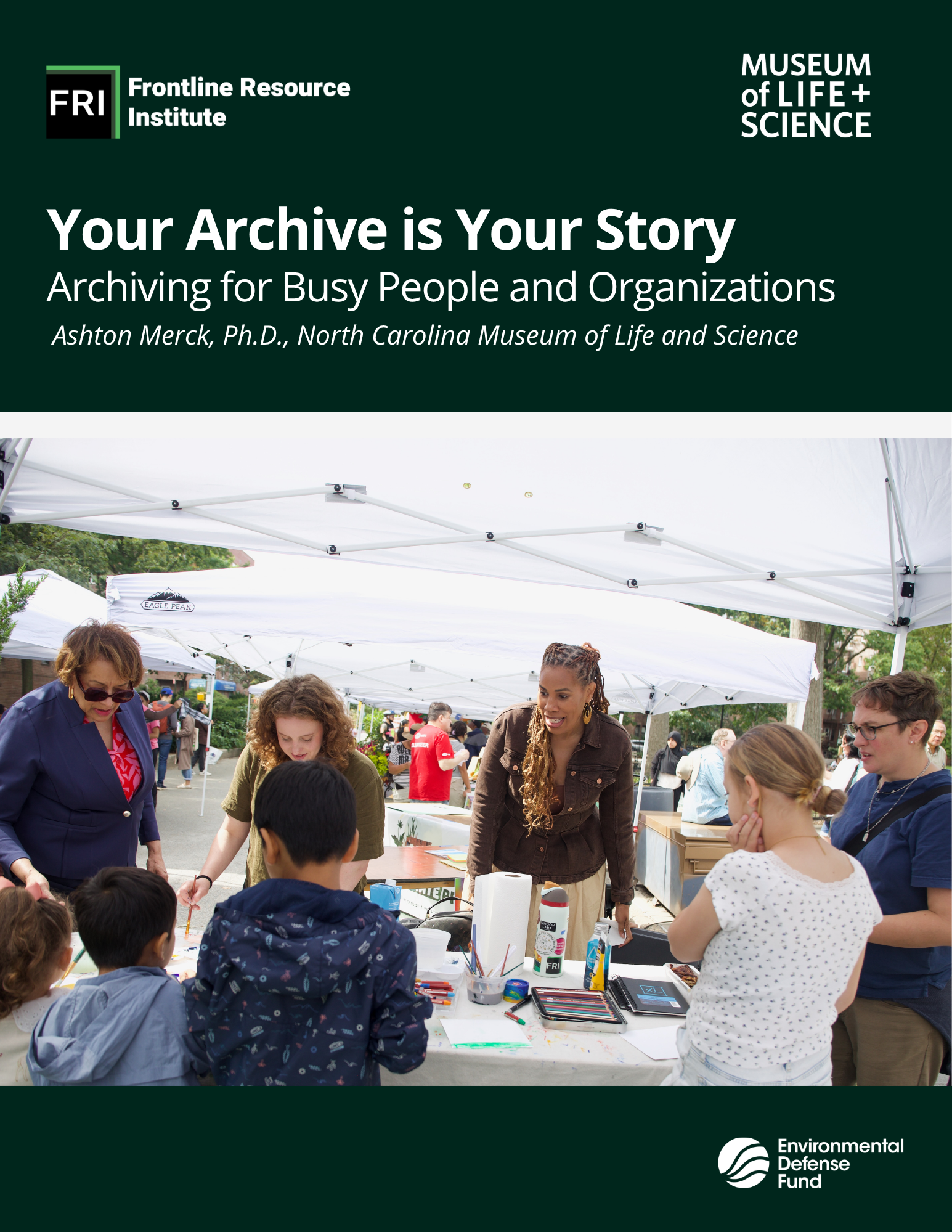
Looking to start an archive for your community or organization? This workbook shares step-by-step guidance to make your archive work for you.
What is an archive?
An archive is merely a collection of materials documenting your organization or community’s history. It doesn’t have to be organized or public to be an archive. Though the mundane documents of your work might not seem important at the time, the letters, documents, stories, notes, and other community and organizational “stuff” that crosses your desk is critical for preserving the stories of your people, place, and community on your terms.
Choosing to keep an archive doesn’t mean holding on to everything. It means deciding what you can hold on to and keep track of, and what is important for understanding your story.
Six questions to ask yourself before you begin archiving
- What are some important things for young people or future generations in your community to know about their people and place?
- What is important for others outside your community to know about your place, community and/or organization?
- What are some shared experiences or activities that define your community and/or organization?
- How could you preserve or document it for someone in the future who may never experience it firsthand?
- What sorts of stories do elders and/or leaders have to share? What are some goals you have for talking to elders? What do you hope to learn from them?
- How do you want your community and/or organization to be remembered?
Where do I start?
To work through the process of beginning an archive, start with the Your Archive is Your Story workbook. This resource includes a practical, step-by-step breakdown of how to approach archiving; helpful definitions and tips, including guidance for preserving different types of materials, tailoring an archive to suit your organization’s needs and capacity, and how to use archives to responsibly steward your community’s legacy; and reflection prompts throughout to encourage you to think about the archiving practices and principles that are best for you and your organization. To work through this process, start here!


