

Reflections from FRI's Acting Director, Margot Brown, Sc.D., MSPH.
More than sixty years ago, Dr. Martin Luther King Jr. delivered his powerful speech “How Long, Not Long.”
In it, he reminded us that “we shall overcome because the moral arc of the universe is long, but it bends toward justice.” While his words offer comfort, King’s speech also issued a challenge: “We are not about to turn around. We are on the move now.”
Today, it can feel like we are moving backward. But progress has never been a straight line. Sometimes we are pushed back before we can rise forward. And while the last 12 months have felt disheartening and filled with endless and unnecessary chaos, history reminds us that no moment, no matter how heavy, lasts forever.
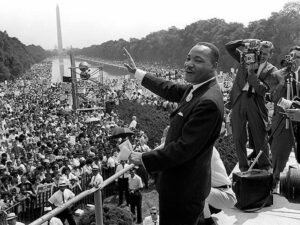
Martin Luther King, Jr., delivering his “I Have a Dream” speech on the National Mall. Photo Credit National Parks Service
Over the past year, the Trump Administration has dismantled dozens of critical environmental protections. One of its earliest actions was revoking Executive Order 12898 – Federal Actions to Address Environmental Justice in Minority Populations and Low-Income Populations – along with all related directives. As a result, federal agencies are no longer required to consider how their policies affect minority communities and low-income communities. Billions of congressionally approved grants meant to improve environmental conditions in these communities were rescinded.
These rollbacks were compounded by sweeping reversals of clean air and water protections, the removal of federal employees sworn to safeguard public health, and the U.S. withdrawal from the Paris Climate Agreement. Under such coordinated assaults, it is hard to see a path forward.
But we can and must move forward. How? Through faith and action.
“Faith is the substance of things hoped for,” but faith without action is meaningless. If you believe that the moral arc of the universe bends toward justice, we must act to make it so. Across the country, governors and mayors are stepping up where federal leadership has failed. From coast to coast, action is bending the arc.
In California, the state has established a Bureau of Environmental Justice within its Department of Justice and is now mandating long‑term community air monitoring in priority areas – strengthening enforcement and increasing transparency around pollution in disadvantaged communities². Minnesota revised their climate action plan to explicitly address environmental justice, ensuring that marginalized communities are central to climate policy³.
In New York City, the new administration has launched the EJNYC Initiative, which includes a comprehensive environmental justice report, interactive mapping tools, community engagement programs, and the city’s first‑ever Environmental Justice Plan⁴. Meanwhile, the City of Imperial in California is adding an Environmental Justice Element to its General Plan⁵, mapping disadvantaged neighborhoods and setting goals to reduce hazardous pollutants and expand green space.
These actions prove that progress is possible, even in the most challenging of times.
The moral arc does not bend on its own; it bends because people of faith and conviction push it forward.
And here is where we come in: we must focus on what is within our nexus of control. We can control who we vote for. We can control the number of elections we participate in. We can control our civic engagement and how we advocate for the issues that matter to us and to our communities. We can control how we use our time and resources to support leaders and organizations working tirelessly to protect the environment and create a healthier, more just world for all.
We know the stakes are high. Studies show that Black and Latino communities are exposed to nearly 60% more air pollution than they produce. These findings serve as a stark reminder of why environmental justice matters. And it does not just matter to those minority and low‑income communities; it matters to all of us. Because if we protect the environment for those who are most exposed, we protect the environment for everyone.
The question is not whether the arc will bend because history tells us it will. The question is whether we will stand up and help bend it now, when the stakes are highest. With the federal government stepping away from its duty to protect people over industry, the burden, and the opportunity, falls to us. This moment demands not resignation but resolve. Our choices today will shape the world our children inherit tomorrow, and we must move now.
References
[1] https://voicesofdemocracy.umd.edu/dr-martin-luther-king-jr-long-not-long-speech-text/
[2] https://calmatters.digitaldemocracy.org/bills/ca_202520260sb352
[3] https://www.house.mn.gov/dflpdf/990649f7-d9db-4ffd-a5b5-496baddbb282.pdf
[4] https://www.nyc.gov/content/climate/pages/environmental-justice
About the Author
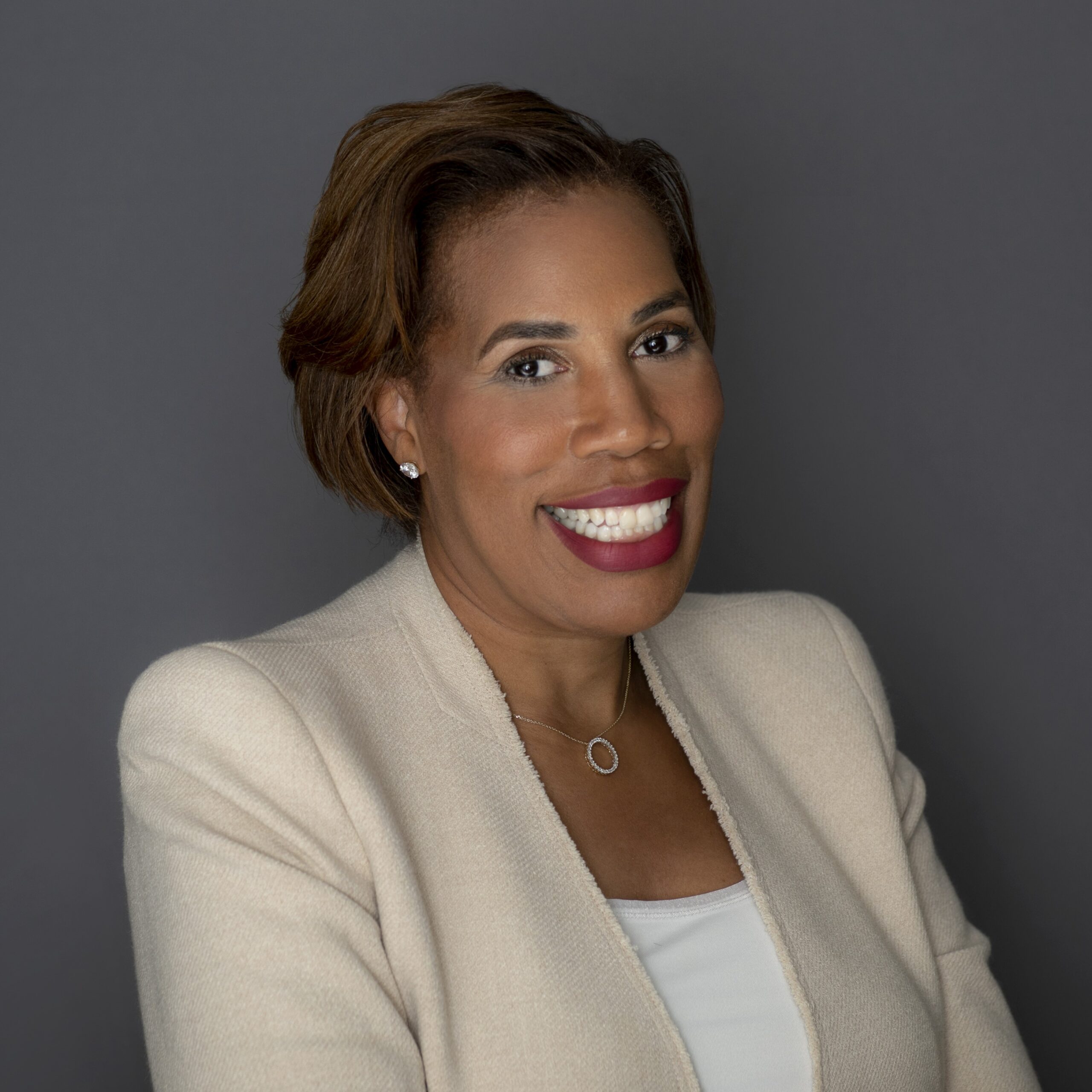
Margot Brown, Sc.D., MSPH
Margot Brown, Sc.D, MSPH., is the Acting Director of the Frontline Resource Institute and Senior Vice President, Justice and Equity at Environmental Defense Fund.