
The Frontline Resource Institute (FRI) is guided by a Conceptual Committee of 10 environmental justice leaders from around the world. This blog post is the second in a series that will introduce you to FRI’s Conceptual Committee members, their motivations and vision for engaging with FRI and the environmental and climate justice movement, and some of the important lessons they have learned in their professional and personal journeys.
Today’s blog features Tony DeFalco, Executive Director of Latino Network in Portland, Oregon.
Provide an overview of your background and your professional work
I have held a number of roles over the years in the areas of grassroots organizing, advocacy, and fundraising. I started out working for the National Wildlife Federation doing organizing on clean air and clean water issues around Lake Superior. I subsequently worked for the Marine Fish Conservation Network which focused on building conservation into fisheries management at the national level. I served mostly in grassroots organizing and policy advocacy roles with them. After that, I spent about three years as development director for Indian Country Conservancy, which worked with tribes around the U.S. to reacquire culturally and ecologically significant lands. From there, I joined Verde, an environmental justice organization based in the Portland, Oregon metro area. I started as a grassroots organizer with Verde and later moved into the roles of deputy director and then executive director. Currently, I serve as executive director of Latino Network, an advocacy and direct service agency that serves Latine communities in the Portland metro region.
What is your motivation to engage in the environmental and climate justice movement?
My motivation comes from early experiences spent in nature. I grew up in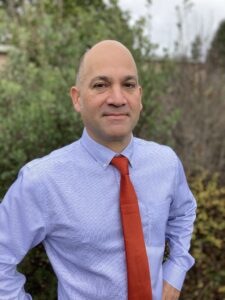 southern California and as a child I was always at the beach. In the summers, I was fortunate to take trips with my family to Yosemite National Park. One of my earliest memories is of smelling ponderosa pines and hearing the calls of Steller’s Jays while visiting the park. Those experiences stayed with me and influenced my early desire to engage in environmental advocacy. My interest in social justice came later during my high school and college years when I learned more deeply about the dynamics of race, class, and gender in the U.S., and how those dynamics can inform a more holistic understanding of – and the need for – environmental justice.
What are some lessons learned from your involvement in the environmental and climate justice movement that you would like to share?
- Don’t be afraid to ask for help. Frontline organizations face many pressures, from urgency to limited resources for strengthening internal systems – like finance and human resources – and making sure people are compensated equitably. You can’t do it all without help. Acknowledge that, be vulnerable about it, and ask for help, early and often.
- Self-care and growth are critical. Taking care of yourself and adopting a growth mindset where you are constantly analyzing how you show up as a leader, what language you use, how you treat others, and what your own faults and biases are. This is work we all must do, especially if you occupy spaces like I do as a middle class, light skinned, highly educated, cis-gender male.
What is your interest in engaging with FRI, and what is your vision for the organization?
When I was approached about engaging with FRI, I was very excited. I knew firsthand from my experiences serving at Verde that this particular kind of resource was very much needed. I acutely felt and understood the challenges faced by environmental justice organizations around fundraising and accessing various kinds of technical support, like legal and human resources assistance. I knew a resource like FRI would have been valuable to me and hoped to help create something of value for frontline organizations and communities. My experience informed my vision for FRI, which was to provide robust offerings for frontline organizations and communities around technical assistance, access to resources, and access to shared learning. As a conceptual committee, we have worked hard to get to a place where FRI really represents that well.
FRI is like a port in the storm, a place communities and organizations can turn to that not only understands them, but is built by and for them.
What do you hope to see FRI accomplish in the next 10 years?
My hope is that FRI will be a sturdy and robust resource that people can reliably turn to for access to resources, technical assistance, shared learning, community, and networking. Resources like FRI are needed more than ever before given the scope of the challenges we face. The intertwining crises of climate change, economic disparities, and patriarchy can make it hard for frontline organizations and communities to strategize, make decisions, and engage in community. Of course, FRI won’t be the end all, be all for everyone, but to have more of these kinds of institutions and the resources they bring to bear is absolutely critical to address global challenges and secure justice for communities.
Share a recent project you are proud of.
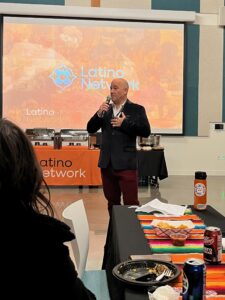 In 2025, Latino Network opened La Plaza Esperanza, a community center and preschool in the Rockwood neighborhood of Gresham, Oregon. This was the culmination of decades of work by the Latine community to build a place of hope, pride, and resilience.

About the Author